

No, Creators Don't 'Deserve to Be Paid' for This
The influencer political advertising boom is poisoning democracy.
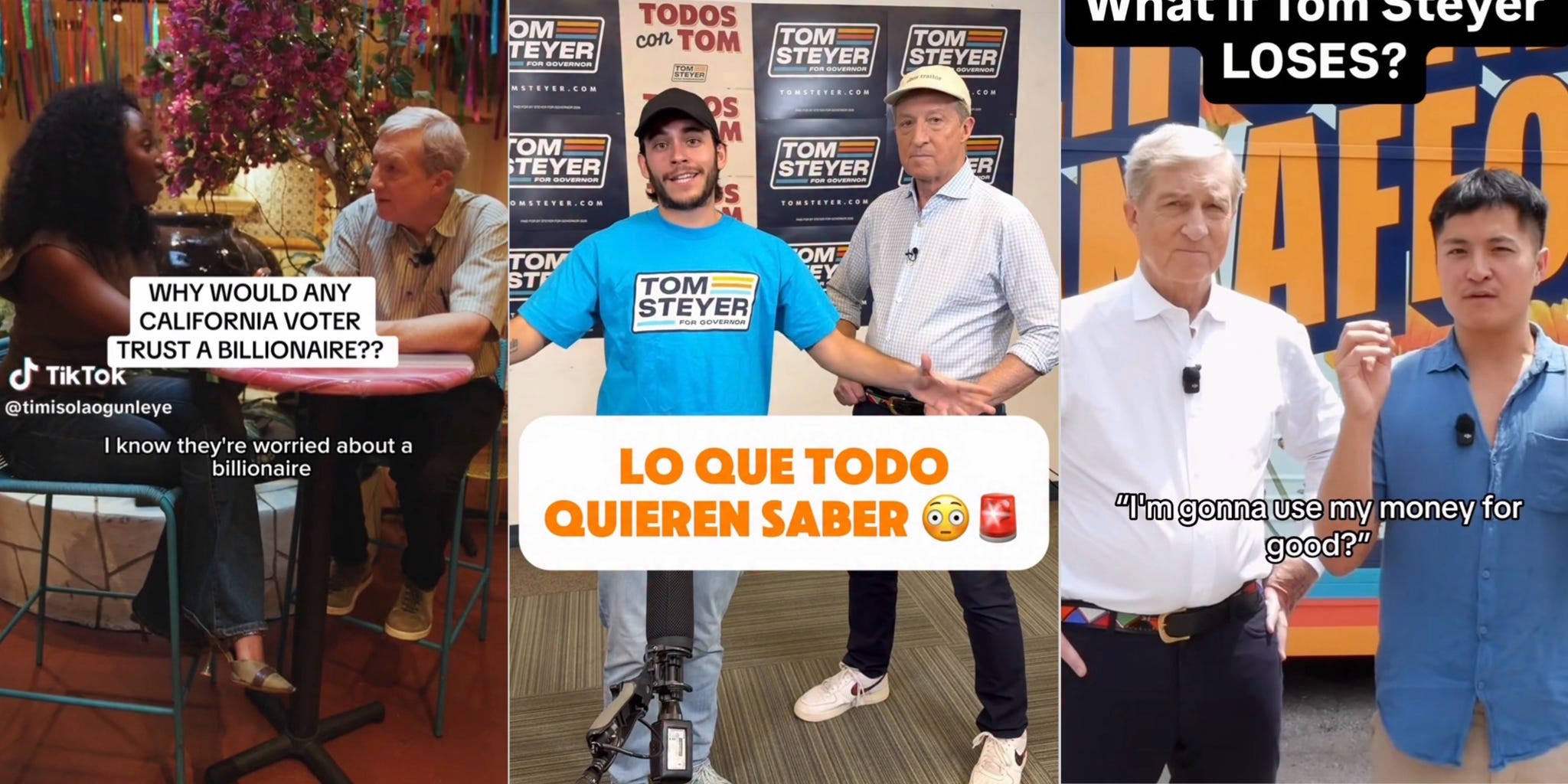
Over the past several weeks, campaign disclosures have revealed that California Gov candidate Tom Steyer has been paying hundreds of thousands of dollars to influencers, almost none of whom initially included proper disclosure on their posts.
Progressive YouTuber Carlos Eduardo Espina received $400,000 from the Steyer campaign. FOOS GONE WILD, an Instagram page with 3.3 million followers that posts viral clips received $50,000. Instagram tea page The Shade Room received another $25,000. Earlier this month, a report from The Sacramento Bee revealed that, in addition to Steyer’s direct influencer marketing, the campaign is also utilizing a UGC platform, paying regular people, some of whom live out of state, $10 to post in support of Steyer on TikTok and Instagram.
After Kamala Harris’ loss in 2024, Democratic insiders finally began to meaningfully dip their toes into the new media landscape. Well paid consultants began pitching donors on a slew of new initiatives aimed at helping Democrats “win back the internet.” Last year, I reported for WIRED on one disastrous initiative funded by the powerful liberal dark money group The Sixteen Thirty Fund called the Chorus Creator Incubator Program. Content creators in that program accepted thousands of dollars per month to take part in a program aimed at boosting Democratic messaging online, all without disclosure.
When the story broke, the response from the influencers was indignant. The content creators, who signed contracts that some in the program described as restrictive, claimed that they “deserved to be paid for their work.” The Steyer campaign echoed this rhetoric more recently. “We compensate [influencers] for their work and their time, just like campaigns pay staff, consultants, media firms, strategists, and vendors across every part of politics,” the campaign posted after their disclosures were made public. “We’ve never paid for an endorsement, and we never will.”
This seems to be the new cut-and-paste response from Democratic political campaigns as they veer deeper into influencer marketing. Yes, we paid that influencer nearly half a million dollars to be a “strategic advisor” and he happened to post favorably about our campaign online, do you not think influencers are doing real work? Do you not support creatives being paid for their labor?
As someone who’s reported on the influencer industry for over 16 years, wrote a book on it, and has argued relentlessly for labor protections in the space, I find this new line of response lacking. Saying “creators deserve to be paid for their work” obscures the central question: what work? Because the type of “work” these creators are currently producing, I would argue, is not something influencers should be paid for under a fair political system.
When a political campaign or affiliated super PAC or LLC pays an influencer to produce content in support of a campaign, it’s usually classified as “digital advertising”. But the content produced is hardly recognizable as an ad. It is usually organic-seeming hyper-personal content. Often, the creator weaves details about their own life into the political messaging.
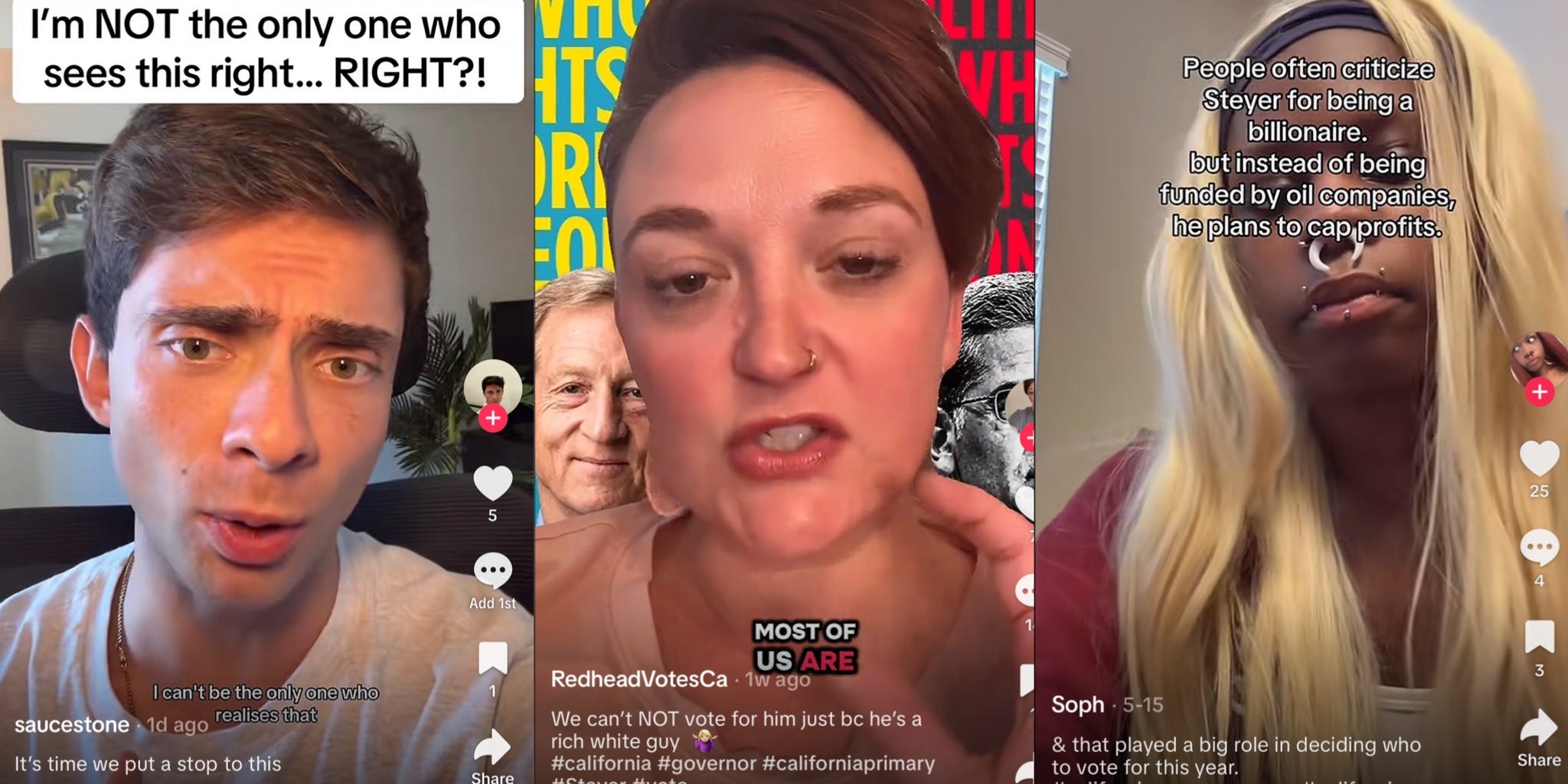
“I’ve dreamt of the day that I would be able to press a billionaire,” one influencer’s recent sponsored post with Steyer is captioned. “I was brought in to ask Tom Steyer some questions myself, and many of my followers needed answers to! What do you guys think?” The disclosure that the post was wholly paid for by Steyer was hidden at the bottom of the caption, only visible to users who clicked “see more.”
Larry Lessig, a professor of law at Harvard Law School and the former director of the Edmond J. Safra Center for Ethics at Harvard University, who has dedicated much of his career to getting money out of politics, told me that the proliferation of this type of influencer marketing in politics is “terrible, because it weakens the ability of people who are not being paid to be heard credibly. If everybody thinks that everybody’s being paid and nobody’s going to pay attention to what anybody says.”
Lately, several campaigns have avoided the few disclosure requirements that exist by hiring influencers on as “consultants” or paying them vague “appearance fees.” They issue payments through management companies or throwaway LLCs to obscure who is being paid for what.
But fundamentally, what the campaigns are buying is a new form of highly effective political advertising where influencers will promote a candidate or their messaging to parasocial audiences in an organic-seeming, often hyper-personal format that does not read to the average viewer as an ad. That is the “work” that these creators are being paid for, whether they want to acknowledge it or not.
The campaigns are not exchanging money for the creator’s time or their editing skills. The value the influencer is offering is access to their parasocial audience who doesn’t realize they’re being marketed to.
If the work the creator was being compensated for was merely making a video, the honest version of that work already exists: create an overt ad for the campaign, co-post the ad with the campaign page, use the paid partnership label, and clearly disclose the content as the ad that it is. The reason campaigns and influencers don’t do this, is because a clear political ad is nowhere near as effective as the covert advertising they’re producing instead.
“If Tom Steyer paid CBS $10 million and then CBS ran ads for Tom Steyer and Steyer said, well I didn’t pay CBS for the ads, I just paid CBS, I mean, nobody would believe that,” Lessig said.
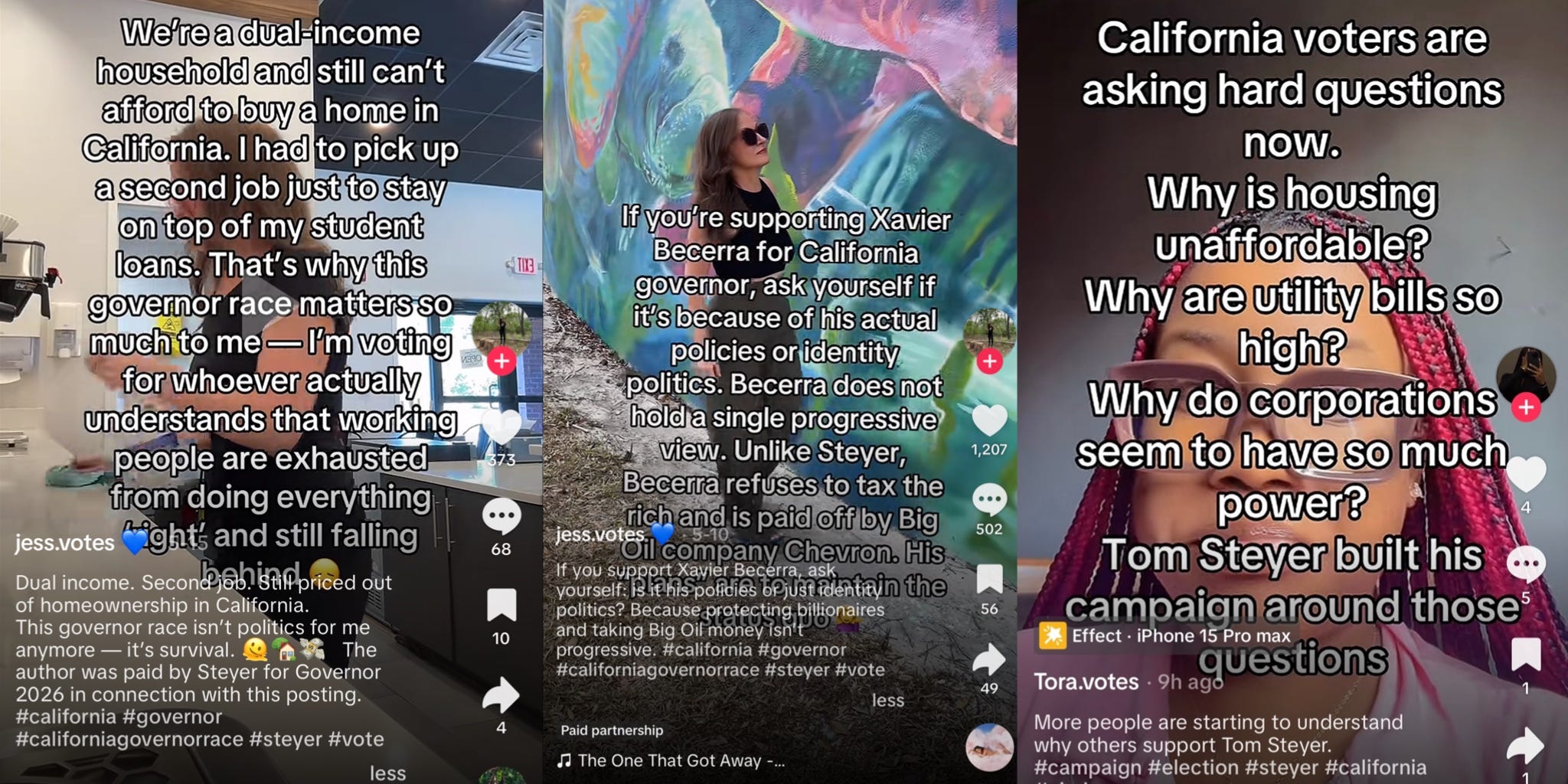
The entire influencer industry is built on simulated intimacy and audience trust. These political campaigns are buying access to that trust and those relationship dynamics. In any healthy democratic system, there would be an understanding that this type of thing should not be for sale.
I do think content creators should be free to endorse whichever candidates they support as citizens, and I think politicians should absolutely engage more with the creator economy. Candidates should appear (for free!) on podcasts, go on YouTube livestreams, make Twitch appearances, and speak to the new media. If campaigns want to explicitly promote their candidate or message, there are many legitimate digital avenues to do that. They can buy ads on podcasts and YouTube channels, they can pay to promote their own advertising content directly across Instagram, TikTok and X in posts that are clearly marked and presented as ads.
What should not be normalized is this ethically dubious middle ground where campaigns covertly purchase access to parasocial trust networks while pretending they are merely compensating creators for “labor.”
In any just political system, this kind of advertising would be heavily regulated, if not outright illegal. The entire point of campaign finance and advertising law is supposed to be ensuring that the public understands when they are being advertised to. Influencer political marketing is explicitly designed to blur that line.
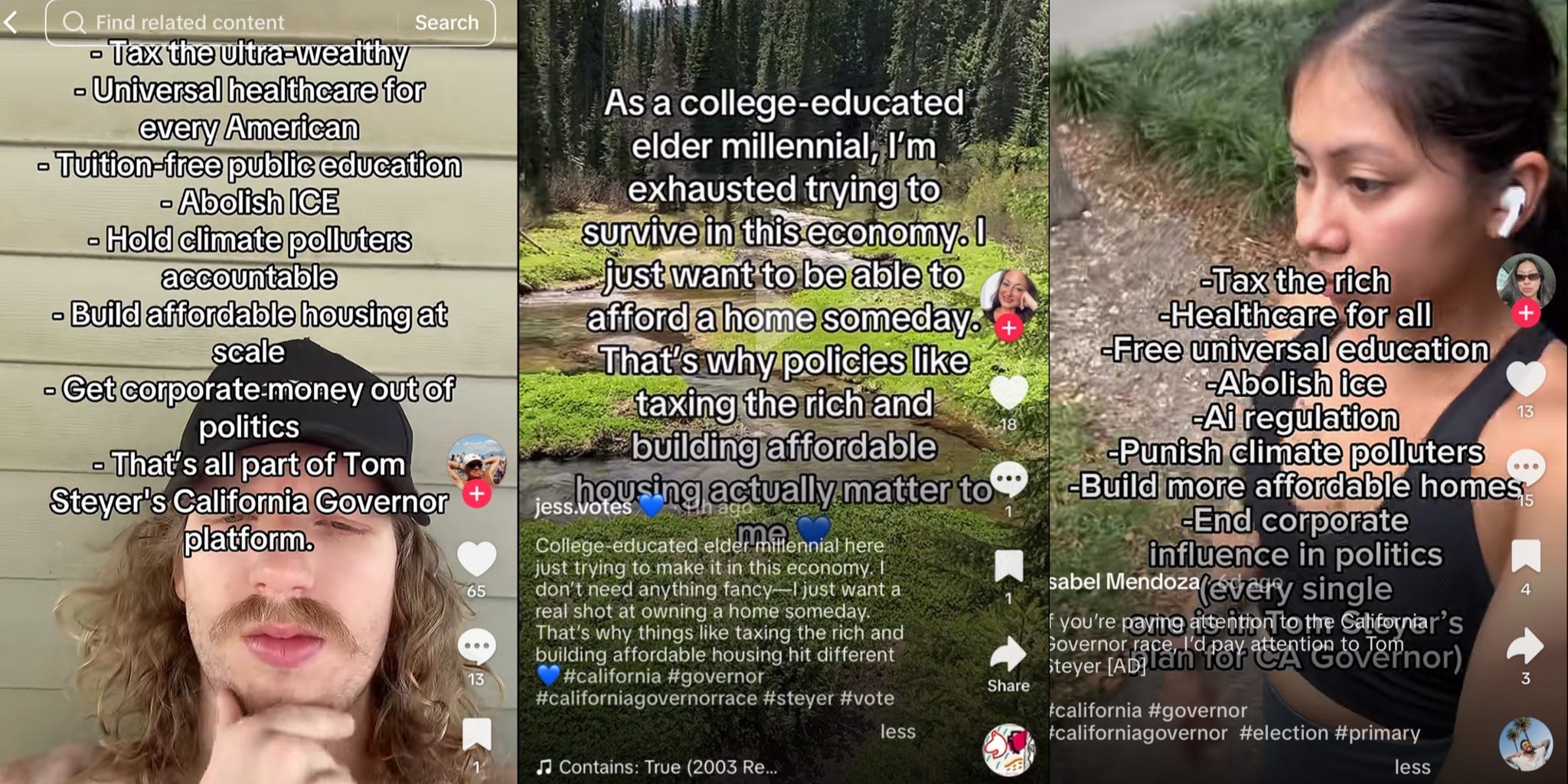
Unfortunately, because political advertising is regulated by the FEC, which is functionally non-existent, we are left with a patchwork of state regulations. California’s Fair Political Practices Commission has launched an investigation into Steyer’s influencer campaigns to determine if they violated state transparency rules. However, the results will likely have zero consequences.
I realize that my stance on this is unpopular in the political world. When I bring the topic up, Democratic political strategists all argue that they should not hold themselves to higher standards than the Republicans, who have a long history of leveraging dark arts digital marketing tactics to amass online power. Doing so will cause them to lose. Liberal and left-leaning creators also say that they don’t want to turn down paid opportunities with Democratic candidates when so much of the right wing creator ecosystem is pay to play. I’m sympathetic to those arguments, and I think the Democratic consultants are right, they will lose if they avoid keeping pace with the Republicans. But I also think we need to think bigger.
Right now, we are in race to the bottom that Democrats, of all people, should understand they cannot win. The more that campaigns and political groups normalize this type of dubious influencer advertising, the more they erode public trust in our entire online media and information landscape. Audiences are already drowning in ragebait, AI slop, and sponsored content. Injecting undisclosed or barely disclosed political messaging into that ecosystem only accelerates the total and complete collapse of trust.
Eventually, voters will tap out. You’re already seeing this nihilism take hold. The public cannot discern who is bought or what is paid for. The Democrats might not realize this now, but refusing to fight for more transparency and regulation on the vast amount of money flooding the influencer advertising ecosystem is suicide for their movement long term.
Poorly mimicking the far right’s most unethical online marketing schemes is not an effective way to rebuild public trust in democracy or elections. Democrats cannot claim to care about protecting democratic institutions and the integrity of our information ecosystem while insisting that creators "deserve to be paid for their work” dismantling both.