
The Influencer Industrial Complex is Warping Local Politics
Political content creators are seeking to build their brands through collabbing with candidates, often without proper disclosure.
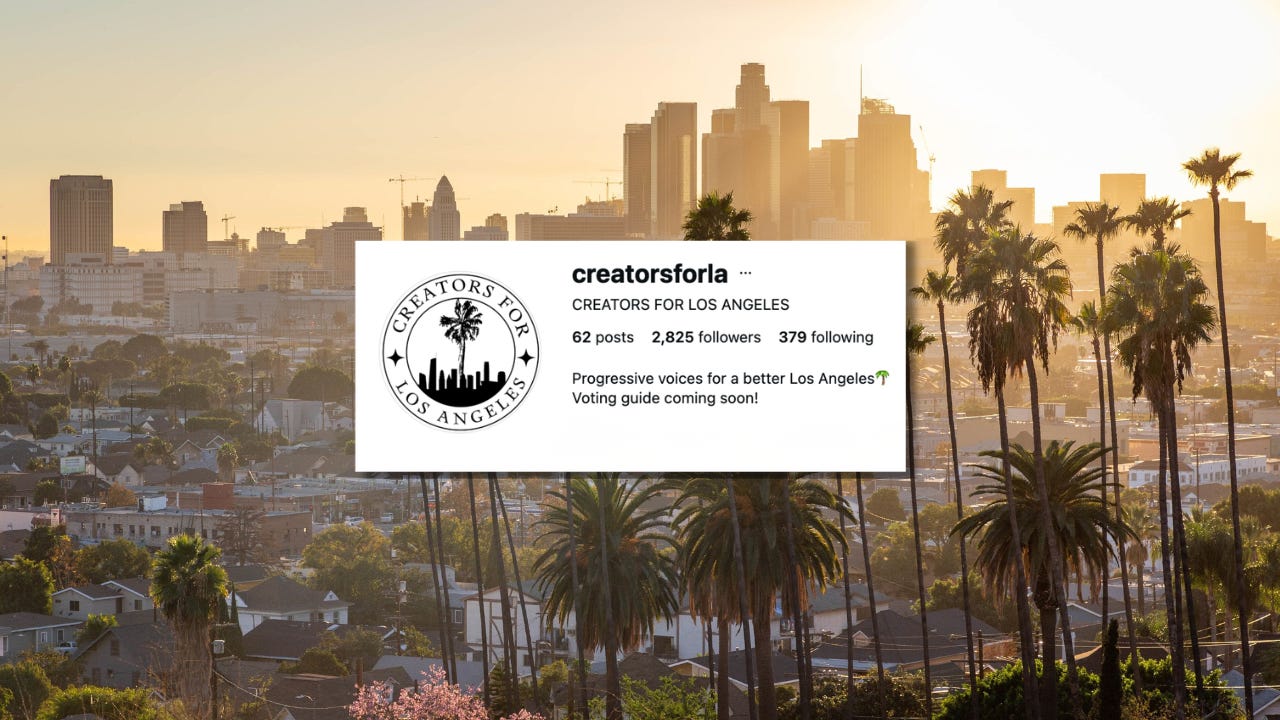
In late February, Alexis Rose Hinkley, a Los Angeles influencer with over 1.1 million followers on TikTok and more than half a million on Instagram, sent an email to Rae Huang’s campaign with a proposal. She touted her “large, highly engaged following” and asked the campaign for payment. She wanted $2,000 per month for a minimum of six months for “strategic messaging” and helping to “translate policy priorities into compelling, authentic content,” according to an email verified by the campaign.
“If the campaign can help build a platform and framework that allows me to put my audience behind Rae without compromising the trust I’ve established, this collaboration can expand,” she wrote. That expansion “would include a full public online endorsement and a coordinated push to galvanize other creators and influencers.”
Huang’s campaign balked. They had not yet hit the city’s matching program for fundraising and were subsisting entirely on small dollar donations. They certainly didn’t have the money to pay an influencer thousands of dollars per month. They made it clear to Hinkley that she would not be paid. Hinkley stopped responding and soon began consulting for Nithya Raman, whom she now uses her platform to support.


